You may have read this blog post 7 Personal Brand Website Mistakes To Avoid. To illustrate how these principles work in practice, let’s examine the personal brand evolution of Stephan Spencer, a pioneer of SEO who started creating websites and helping them rank back in the 1990’s.
To see the evolution of his brand and what his websites looked like way back then, watch the full story on Stephan’s MarketingSpeak podcast.
Stephan started building websites in the mid-nineties while still a graduate student. He launched a bed and breakfast directory called InnSite and a writers community called WritersNet before dropping out of his PhD program in 1995 to start Netconcepts.com.
By the time Google launched in 1997, Stephan had already been reverse-engineering search algorithms for years. He quickly recognized Google’s weighted link authority system as a game-changer and doubled down on mastering it.
This early expertise led to remarkable success. Stephan co-authored the 800-page definitive guide “The Art of SEO“, hosted two successful podcasts, spoke at Stanford University and major conferences, and worked with brands like Sony, Chanel, and Zappos. In 2010, he sold his agency Netconcepts for a significant sum.
But Stephan made a critical mistake: he invested heavily in building the Netconcepts brand rather than his personal brand.
“When I invested in the early years in the Netconcepts brand, I didn’t realize that at some point I would sell that brand,” Stephan reflects. “I always thought that these are intertwined, me and my company. At some point, you’ll hopefully sell your company, and then what are you left with? Only your personal brand. If you haven’t invested in one, then you’re left with nothing.”
This realization led to a crucial insight: your personal brand is the brand you take from cradle to grave, while business brands can be sold or dissolved.
This realization led to a crucial insight: your personal brand is the brand you take from cradle to grave, while business brands can be sold or dissolved.
The 2015 Personal Brand Website: Credibility Without Clarity
When Stephan first approached Studio1 Design in 2015, his personal brand website StephanSpencer.com faced several common challenges:
- Authority dilution – Multiple areas of expertise weren’t clearly connected under a unified brand narrative
- Unclear pathways – Visitors couldn’t easily determine whether they needed SEO consulting, speaking services, or podcast appearances
- Scattered social proof – Impressive credentials and results were buried throughout the website rather than strategically positioned
- Conversion confusion – Multiple calls-to-action competed for attention without a clear hierarchy
Despite having incredible credibility, co-authoring “The Art of SEO,” hosting successful podcasts, and speaking at major conferences, his digital presence didn’t effectively communicate the breadth and depth of that expertise to potential clients.
The Transformation Challenge: Integrating Spiritual Growth with SEO Expertise
Between 2015 and 2025, Stephan underwent a profound spiritual transformation that fundamentally changed how he approached both business and life. He developed a unique methodology combining spiritual wisdom with traffic and conversion practices, helping business leaders transform both their business and personal lives.
The challenge was clear: How do you integrate this expanded expertise without alienating your established SEO and marketing audience?
Greg & Stephan worked together to develop a comprehensive strategy that positions Stephan as a multifaceted transformational advisor who helps business leaders achieve breakthrough results through a unique combination of marketing expertise, strategic thinking, and consciousness-based leadership principles.
The 2025 Redesign: Strategic Positioning for Multiple Audiences
The 2025 redesign focused on several key strategic areas:
1. Unified Brand Positioning
Rather than presenting separate silos of expertise, we positioned Stephan as the strategic advisor who bridges technical knowledge with business results. The site created distinct pathways for different audience types:
- Companies needing SEO consulting and implementation
- Event organizers seeking speakers for conferences
- Business leaders needing deeper transformational guidance
Each pathway has separate landing pages with clear qualification processes to ensure good client fit.
2. Authentic Personal Brand Differentiation
One of the most powerful elements of Stephan’s redesigned website is his willingness to share his complete journey, including personal transformation, many professionals would hide.
His About page timeline includes before-and-after photos from 2009-2010 showing his dramatic physical transformation (LASIK, hair transplant, diet changes, fitness). The change was so dramatic that at conferences, people wouldn’t recognize him without his badge.
“I don’t think it makes you real to hide all the previous versions of you,” Stephan explains. “I want to be authentic and share my story.”
His timeline doesn’t just showcase professional achievements, it includes deeply personal milestones like moving his family to New Zealand in 1999, meeting his soulmate Orion, getting married, and the birth of his daughter in 2019.
“People want to know, like and trust you,” Stephan emphasizes.
“So you got to highlight your story of struggle, the hero’s journey, trials and tribulations, not just your Instagram-ready success moments, but some of the crazy wild ride as well.”
3. Strategic Social Proof Placement
Perhaps the most sophisticated element of Stephan’s website is how social proof changes based on page context:
“The elements of social proof change,” Stephan explains. “On the results page, the clients served logo bar is prominent, Sony, Chanel, Zappos. You go to the press page, and that’s changed to media outlets, as seen on [various publications]. You go to the speaking page, and now you see the logo bar is events that I’ve spoken at, Affiliate Summit, IRCE, Stanford University.”
This strategic placement ensures social proof is always relevant to what the visitor is evaluating on that specific page.
4. Singular Focus Per Page
Every page has one clear call-to-action aligned with visitor intent.
“For each page, it’s one thing,” Stephan explains. “If you’re on my speaking page, it’s download the speaker kit. If you’re on the results page, it’s to request a free consult. Any page is a potential landing page or entry point from Google or from an LLM. So what’s the next action? It should be clear. It should be singular. Clarity is king.”
The Results: Attracting the Right Caliber of Client
“The new website didn’t just look better,” Stephan explains, “it fundamentally changed how people perceive my expertise and approach me with opportunities. I’m now getting the caliber of client that matches my passion, experience, and results.”
Visit the entire website here: StephanSpencer.com
The professional, authority-driven website gave Stephan confidence to pursue high-profile opportunities. As he puts it, “Studio1 is one of my secret weapons.”
Key Lessons from Stephan’s Journey
Stephan’s 30-year evolution reveals several critical principles:
Invest in your personal brand, not just your business brand. As Stephan learned, business brands can be sold, but your personal brand travels with you from cradle to grave. In the AI era where prospects prompt tools to find experts, having a strong personal brand ensures they search specifically for you.
Authenticity builds trust faster than perfection. Stephan’s willingness to share his physical transformation, spiritual evolution, and personal milestones makes him relatable and trustworthy, not less credible.
Match social proof to page intent. Generic testimonials placed randomly don’t build trust as effectively as strategically matched social proof. Client logos on results pages, speaking venues on speaking pages, and media outlets on press pages.
Clarity is king. Every page should have a singular focus and one primary call-to-action. Multiple competing CTAs create decision paralysis and kill conversions.
Your website is never finished. Even with decades of expertise, Stephan continues to refine and evolve his personal brand presence. “Always be looking for opportunities to get testimonials and case studies,” Stephan advises. “Your website’s never finished.”
Think in terms of visitor journeys. “If you think about conversion-focused design, think of it like you’re taking that prospect on a journey,” Stephan explains. “Whether or not they become a client is immaterial because if your prospect is better off being served by your competitor, you should do that. I believe in business karma, what you give comes back to you.”
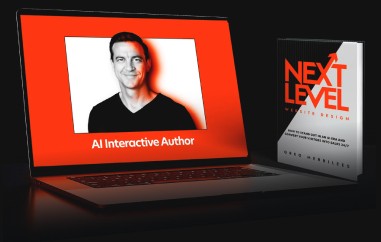
This case study is based on the personal brand chapter in my book, Next Level Website Design, where we unpacked how we helped Stephan.
Next Level Website Design Greg’s New Book, Out Now!
Your blueprint to designing a high-converting website. Packed with proven strategies to boost your results in any niche.
How to Create a Strong Personal Brand Website
Get clear on who your target market is
Designing a conversion-focused website starts with knowing your target audience.
Understand their situation, pain points, and goals. Once you know what drives them, you can create content and design elements that speak directly to them.
When you’re clear on your audience, everything from your messaging to your CTAs will resonate more deeply. This clarity will help you attract the right people and filter out those who aren’t a good fit.
Create a compelling hero section on the home page
Your hero section should grab attention in 5 seconds or less. Craft a headline that clearly communicates how your audience can benefit from your offer, so they can quickly understand what’s in it for them.
Keep it straightforward, using an image or video that reinforces the message, and make sure your CTA is clear and prominent, directing visitors to take the next step.
Write benefit-driven copy that has clarity
While your personal brand website is your avenue to showcase your expertise and credibility, your audience is more interested in how they can benefit from your offer.
They want to know how you can solve their problems and improve their lives.
So talk about their situation and problems to make them feel heard and understood, and then present your solution.
Keep the copy easy to understand, avoiding any jargon. Every sentence should lead the reader closer to taking action.
Create clear, specific CTA
Your CTA should be straightforward. Avoid vague terms like “Learn More” or “Contact Us” – instead, focus on action-driven phrases like “Download Free Guide” or “Book a Strategy Call.”
Place CTAs strategically to lead visitors on the right path toward your solution for their problem. Make sure each CTA links directly to the next step, whether that’s opting in, making a purchase, scheduling a call, or filling out a form.
Add social proof that proves you’re telling the truth, testimonials, case studies, before and after, etc.
Include testimonials, case studies, and before-and-after examples that show real results that you helped them achieve. This demonstrates to potential clients that others have trusted you and benefited from your offers.
Your client testimonials should include different segments of your target market. The purpose is to resonate with your various audiences, reassuring them that your solution will work specifically for them.
Add credibility and share your expertise to back up your claim
Showcase your qualifications, years of experience, reputable people or businesses you’ve worked with, and any notable awards or certifications you’ve earned.
Stephan has this Wikipedia page and this Grokopedia page, which helps Google and LLMs know that you are a trusted authority in your field of expertise.
This also reinforces your authority and reassures your visitors that you’re the real deal.
Stephan was kind enough to create this Greg Merrilees Grokopedia page for me =)
The more evidence you provide, the more likely your potential customers will choose you.
Segment your audience to have a clear pathway
Organize your website content to guide different types of visitors. Whether they’re cold, warm, or hot leads, make it easy for them to find the solution to their problem.
By segmenting your audience, you can deliver tailored content that addresses their specific concerns and moves them toward your desired action.
Lead with value
Always offer something beneficial upfront, whether it’s a free guide, valuable content, or a free consultation. This shows that you’re focused on helping them get a result, not just trying to sell to them.
When you provide value from the start, you build trust in your brand and nurture relationships with your potential customers.
Include a ‘Thank You’ page offer or funnel
After your visitor completes an action, like opting into your free offer, the thank-you page is a great opportunity to offer more value.
Use this page to present the next step, such as a limited-time offer, an invitation to book a call, or free access to your training.
This keeps them engaged and moving through your funnel and builds even more trust in your brand.
Implement effective visual hierarchy
Having well-written copy may not be enough if the design doesn’t enhance it and highlight other important elements on the page that entice people to take action.
You can direct the attention of your visitors to these elements if you have an effective visual hierarchy.
This doesn’t mean critical information should always be bold or in bright colors.
Instead, the strategy for highlighting specific messages or elements should align with your website’s overall flow and design, so you can capture your visitors’ attention without overwhelming them.
Bonus Things To Consider to Establish Your Brand
People are trying to get to know you beyond your website. Once you get their attention through your website, they may become more interested in you and search for your social media presence.
Being your authentic self on social media, just as you present yourself on your personal brand website, helps build trust with your audience.
On the other hand, if people haven’t seen your personal brand website and just heard about you somewhere, they may search for your name online and find your social media profiles.
That said, what’s the first impression you want them to have of you? So stay true while maintaining professionalism on your social media platforms to attract the right people.
Conclusion
Building a successful personal brand website requires avoiding common pitfalls while implementing proven conversion principles. As Stephan Spencer’s journey demonstrates, even the most credentialed experts need strategic website design to effectively communicate their value and attract ideal clients.
Your personal brand is the one asset you take from cradle to grave. Unlike business brands that can be sold or dissolved, your personal reputation travels with you forever.
In today’s AI-driven marketplace, where prospects can prompt tools to find experts, having a strong personal brand ensures they search specifically for you rather than accepting generic recommendations.
By avoiding the seven mistakes outlined in this article and following the implementation strategies in the “How to Create a Strong Personal Brand Website” section, you can build a personal brand presence that positions you as the obvious choice in your market.
Remember: authenticity builds trust, clarity drives conversions, and your website is never truly finished. Keep evolving, keep optimizing, and keep showcasing the genuine expertise that makes you uniquely valuable to your ideal clients.
Ready to Transform Your Personal Brand Website?
At Studio1 Design, we’ve helped experts like Stephan Spencer transform their personal brand websites into powerful client-attraction engines. Our proven S.C.A.L.E. Website™ process combines conversion psychology with strategic positioning to create websites that don’t just showcase your expertise, they attract the caliber of client that matches your passion and experience.
Whether you’re building your first personal brand website or ready to evolve your existing presence, we’d love to discuss how we can help you avoid these common mistakes and create a website that positions you as the obvious choice in your market.
Book your free strategy call to discover how we can transform your personal brand website into your most powerful business asset.