Key Takeaways
-
- A mood board removes the guesswork from design; it aligns your designer with your vision before a single page is built, saving you time, money, and frustration.
- The best mood boards are built on deep research: your audience, your competitors, and your brand’s desired emotional response all shape the visual direction.
- Once a mood board is approved, every design decision, from color palette to typography to photography, has a clear, agreed-upon foundation to build from.

Have you ever hired a designer, waited weeks for a result, and then felt your heart sink when you saw the final design?
You tried to explain what you wanted. They tried their best. But somewhere between the brief and the final file, your vision and their interpretation went in completely different directions.
It happens all the time. And it’s one of the most costly, frustrating experiences a business owner can go through, especially when you’ve already used up your revision rounds and still don’t love the outcome.
After designing over 2,000 websites for entrepreneurs, online brands, and global names, including Sylvester Stallone and Pretty Woman producer Gary Goldstein, I’ve learned that the secret to a design you’ll love isn’t talent alone. It’s alignment before the design begins.
That’s exactly what a mood board does.
In this post, I’ll show you what a mood board really is, how we use it at Studio1 Design, and why it’s the single most important step we take before designing any brand or website.
What You’ll Learn in This Post
-
- What a mood board is and why designers use them
- How mood boards protect you from expensive design mistakes
- The 5-step process we use to create a visual brand at Studio1
- How a mood board sets the foundation for your logo, color palette, typography, and website
- A real-world example of how a 12-page mood board transformed a law firm’s brand
Why Hiring a Designer Feels Like a Leap of Faith
When most businesses hire a designer, the process goes something like this: you fill out a brief, wait a few weeks, and then hope for the best.
The designer starts wireframing pages. They spend days creating a look and feel they think you’ll love. And then you see it, and it’s not what you had in mind at all.
Now you’re in revision territory. Most agencies give you three rounds. You use them all. You’re still not happy. But you’ve already paid, the contract is the contract, and the relationship starts to sour fast.
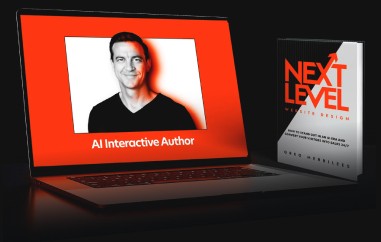
This isn’t because the designer is bad at their job. It’s because there was no shared vision before the work began. In my book, Next Level Website Design, I describe this as “a leap of faith”, and it’s a leap that costs business owners real money and months of their time.
A mood board eliminates that leap.
What Is a Mood Board?
A mood board is a collage of conceptual ideas, graphic design styles, compositions, images, color palettes, photography direction, and fonts, assembled into a document that defines the overall “look and feel” of your brand before any design work begins.
At Studio1, our mood boards are typically 10-page PDFs. They include:
-
-
- Color palettes and combinations
- Typography and font direction
- Logo style direction
- Design styles, icons, and patterns
- Background textures and image treatment
- Photography style and direction
Together, these elements tell a cohesive visual story, your brand’s new identity, laid out before a single website page is designed.
As I explain in Next Level Website Design, “A mood board distills the insights from our discovery phase, including the client’s objectives, audience details, and stylistic preferences, into tangible visuals.”
It’s not a finished design. It’s a visual roadmap. And it changes everything.
Here is the live website GoldenMonk.com
The 5-Step Process We Use to Build a Brand at Studio1
A mood board doesn’t appear out of thin air. It’s the output of a rigorous discovery and research process. Here’s how we approach it:
Step 1: Discovery
Before we touch a design tool, we need to understand your business inside and out. That means getting clear on the following:
-
-
-
-
- What your business does and who it serves
- Your brand’s values, mission, and long-term vision
- The emotions you want your brand to evoke
- What you love visually, and what you don’t
-
-
-
The more detail you give us here, the better. This isn’t just admin, it’s the foundation every future design decision will be built on.
A few things to avoid during this stage:
-
-
-
-
- Too many design elements or styles that conflict with each other
- Too many colors across different touchpoints
- Inconsistency between your online and offline presence
- Copying competitors, originality is your competitive edge
- Changing your brand look too frequently
-
-
-
Step 2: Research
Once we understand your brand, we go deep into your market. We research your competitors, explore current design trends in your industry, and identify visual opportunities to help you stand out rather than blend in.
This phase is where we ask the deeper questions:
-
-
-
-
- What emotions do you want your brand to evoke? (Trust, energy, warmth, authority?)
- Where does your brand sit in the market: premium, accessible, or somewhere in between?
- What design approaches are your competitors using, and how can you differentiate?
- What brands outside your industry do you admire, and why?
-
-
-
This research phase ensures that what we create isn’t just beautiful, it’s strategically positioned to attract and convert your ideal clients.
Step 3: Invisage It with a Mood Board
This is where the magic happens.
Our Brand Director, Karen, a fashion designer turned brand strategist with a razor-sharp eye for composition, takes everything from Steps 1 and 2 and begins assembling concepts. This typically generates a wide range of creative directions.
From there, we filter ruthlessly. We remove anything that doesn’t align with your goals, your audience, or your brand positioning. What remains is refined into a conceptual mood board, a clear, cohesive vision for how your brand looks and feels.
Here’s why this step is so powerful:
-
-
-
-
- Clarity and alignment: You see exactly where the design is heading before a single page is built.
- Confidence: You know what you love and what you don’t, which makes feedback fast and productive.
- A strong foundation: Every design decision from here is anchored to something you’ve already approved.
-
-
-
Once you approve the mood board direction, your designer has a clear, agreed-upon blueprint to work from. No more surprises. No more “that’s not what I had in mind.”
You can view examples of our mood boards at NextLevelWebsiteDesign.com for free.
-
-
Step 4: Build the Visual Brand
With the mood board approved, we move into building the critical brand elements:
-
-
-
-
- Logo: The central symbol representing your brand, designed in alignment with the approved direction.
- Color Palette: A defined set of complementary hues, selected not just for aesthetics but for the emotions they trigger in your audience.
- Typography: Fonts that suit your brand personality and stay legible across all contexts, from your website to your social graphics.
- Imagery and Photography: Clear guidelines around photographic style, illustration, and icon usage.
- Core Layouts: Frameworks for your key web pages, blog images, ads, and social media graphics.
-
-
-
Here’s a blog about How Color Psychology Secretly Controls Your Website Conversions
Every choice, from the weight of a typeface to the style of icons you use, should reflect your brand’s story. This is how great brands feel cohesive. Nothing is accidental.
One important warning: Be careful about choosing a designer who only offers three rounds of revisions. Design is subjective, and it often takes multiple iterations before you absolutely love the result. At Studio1, we offer unlimited design revisions for exactly this reason, because we want you to genuinely love what we create, not just settle for it.
-
-
Step 5: Create Your Brand Style Guide
Once your visual elements are locked in, we create a comprehensive brand style guide, the document that ensures every piece of content, every marketing asset, and every design your team produces stays consistent with your brand.
Your brand style guide covers:
-
-
-
-
- Logo usage rules (primary and secondary versions, minimum sizes, clear space)
- Color palette with hex codes for digital use and CMYK for print
- Typography hierarchy, which fonts to use, when, and at what sizes
- Imagery guidelines, photography style, color treatment, and subject matter
- Tone of voice and verbal identity guidelines
- Do’s and don’ts, clear examples of how not to use your brand
-
-
-
Why does this matter so much? Because every time a potential customer encounters your brand, whether on Instagram, your website, a business card, or a proposal, they form an instant, subconscious judgment about your professionalism and trustworthiness.
When your visual identity is inconsistent, with mismatched colors here and the wrong font there, that disconnect erodes trust. Quietly. Steadily. Without the prospect ever knowing exactly why they didn’t feel confident enough to reach out.
A well-crafted brand style guide eliminates guesswork for you, your team, and any external creatives you work with. It’s the keeper of your brand’s core values, ensuring that anyone who touches your marketing remains faithful to the identity you’ve built.
-
-
Here is the live website BrodyLee.com
-
Real-World Example: How a Mood Board Transformed Ware Landscaping
The Problem: Mike Ware runs Ware Landscaping, a premium drainage and hardscape company serving Naperville and Chicago. Despite a strong reputation and a 10-year “no questions asked” drainage guarantee, his website told a different story. It was outdated, unclear, and failing to pre-qualify leads — attracting price-sensitive inquiries and losing potential clients the moment they heard his premium pricing.
Mike knew the website wasn’t reflecting the quality of his work. He was getting traffic, but very few quality leads, and his close rate was suffering because prospects arrived with no context and no confidence in the brand.
What Changed: Before a single page was designed, our team created a mood board — a complete visual roadmap for Ware Landscaping’s new brand identity. Every element was chosen deliberately: a premium look and feel built around the quality of their real project work, earthy tones that conveyed reliability and craftsmanship, and a photography direction that replaced generic stock images with actual before-and-after project imagery that let the results speak for themselves.
The mood board gave Mike a clear picture of exactly where his brand was heading before anything was built. Once approved, the design team had a locked-in blueprint to execute from — no guesswork, no surprises, and no wasted revision rounds.
From there, the website was redesigned around that approved direction: messaging that led with their drainage expertise and unique 10-year guarantee, a trust-building layout with real customer testimonials and before-and-after galleries, and dedicated advertising landing pages with pre-qualification forms to filter out poor-fit prospects before they reached Mike’s calendar.
The Outcome: The results were immediate. Ware Landscaping achieved a 3x increase in monthly call volume, doubled their lead-to-client close rate, and saw a significant lift in average project value — because better-qualified leads were arriving already confident in the brand.
As Mike put it: “After the new website design went live, I’ve been looking at the new leads, and something remarkable is happening: we’re booking consultations with qualified prospects who already understand our value proposition when they call. Our close rate has nearly doubled.”
The mood board wasn’t just a pretty document. It was the strategic foundation that made every downstream design decision faster, more aligned, and more effective.
Here is the live website WareLandscaping.com
-
Frequently Asked Questions
What exactly is a mood board, and how is it different from a design concept?
A mood board is a pre-design visual direction tool; it establishes the overall style, aesthetics, and emotional tone of your brand before any actual design work begins. A design concept is a rendered page or layout. The mood board comes first and informs everything that follows. Think of it as the brief your designer works from, translated into visuals.
Do I need a mood board if I already have an existing brand?
Yes, especially if you’re refreshing, rebranding, or redesigning your website. A mood board ensures that any changes stay aligned with your core brand identity while giving your designer clear direction on what to evolve and what to preserve. Yosha Law already had an established brand, and a mood board was still the first step we took.
How long does the mood board stage take?
At Studio1, the mood board is created during the initial brand direction phase, which typically forms part of a 3–5 week branding project. The time invested upfront always saves significant time later, because when you approve the direction at this stage, you eliminate the back-and-forth that comes from designing without a shared vision.
What happens after I approve the mood board?
Once the mood board is approved, your designer has a clear blueprint to build from. The logo, color palette, typography, imagery guidelines, and page layouts all flow directly from what you’ve already signed off on. There are no unwelcome surprises, just a design process that feels collaborative and exciting rather than stressful. plus, we give you unlimited design revisions until you love our designs =)
-
Ready to Build a Brand That Converts?
A mood board isn’t just a nice-to-have. It’s the step that separates a design process that’s frustrating and expensive from one that’s aligned, exciting, and built on a foundation you actually love.
When you can see your brand’s direction before the design begins, you make better decisions. Your designer works faster. And the end result, the website, the logo, and the brand assets, is something you’re genuinely proud to put in front of your audience.
At Studio1, every project starts with this process. It’s how we’ve designed over 2,000 websites and built brands for some of the world’s leading entrepreneurs and businesses.
If your current brand isn’t doing your business justice or you’re ready to build something from scratch the right way, I’d love to show you what’s possible.
To find out how your brand is currently performing, download our free Brand Positioning Audit, a practical PDF that reveals what might be holding your brand back and what to do about it.
Or if you’re ready to take the next step, book a strategy call and let’s talk about building a brand and website designed to convert.