Key Takeaways
- AI is a powerful design assistant, not a replacement – Today’s AI tools can generate layouts, code, and imagery, but they lack the strategic thinking, brand intuition, and conversion expertise that drive real business results.
- Strategic design requires human insight – Understanding your audience’s psychology, positioning your brand uniquely, and creating conversion-focused experiences demands the creative intelligence that only experienced designers possess.
- The AI advantage is collaboration – The most successful websites combine AI’s efficiency with human creativity and strategic thinking, using AI to accelerate the process while humans guide the vision and ensure conversion-focused results.
Are website designers doomed?
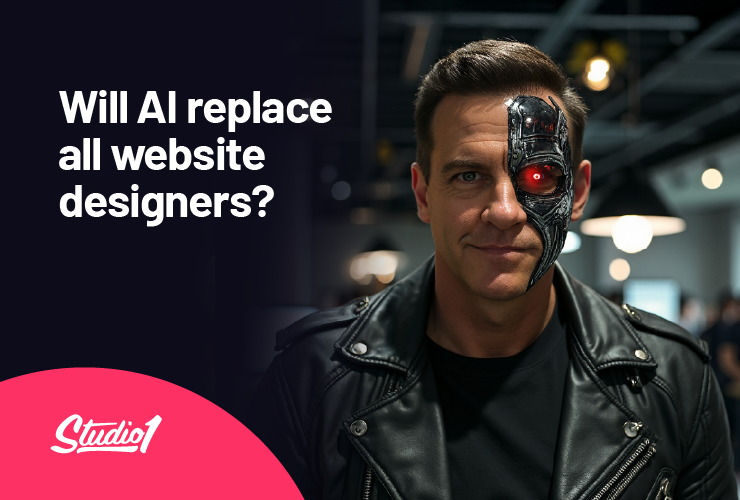
You’ve heard the headlines. “AI will replace designers!” “ChatGPT can build websites now!” “Website Designers are doomed!”
Here’s the truth: AI is not replacing all website designers. AI can replace designers who create simple, template-based websites. But it cannot replace the strategic expertise needed for complex, conversion-focused websites that turn visitors into hot leads and sales.
What I love about AI is how it’s transforming the way we create websites, helping businesses like yours achieve even better results.
At Studio1 Design, we’ve spent the past three years testing every major AI design tool on the market. We’ve integrated AI into our workflow. We’ve pushed these tools to their limits. And here’s what we’ve discovered: AI is an incredible assistant, but it’s no substitute for strategic design thinking.
In this post, I’ll show you exactly why AI can’t replace the conversion-focused design that turns your website into a 24/7 marketing machine. You’ll discover what AI does well, where it falls short, and how the smartest businesses are using AI strategically to get better results.
Why does this matter for your business?
If you’re considering an AI-generated website versus investing in professional design, understanding these differences could be the decision that determines whether your website converts visitors into customers or becomes just another forgettable online brochure.
The AI Design Landscape: What’s Possible Today
The AI revolution in website design has accelerated dramatically since ChatGPT launched in late 2022. Years later, today’s tools are genuinely impressive, but they’re also widely misunderstood.
AI tools are remarkable and genuinely impressive. They can:
- Generate unique imagery in seconds instead of hours
- Write initial copy drafts faster than any human
- Produce working code from simple descriptions
- Create design variations for testing at scale
- Automate repetitive design tasks completely
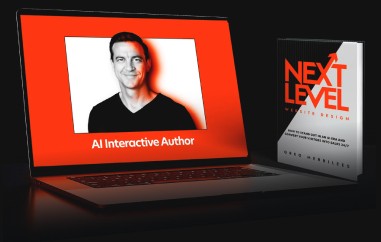
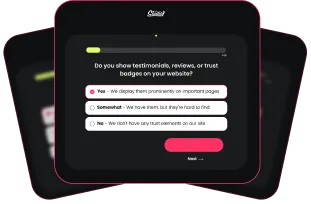
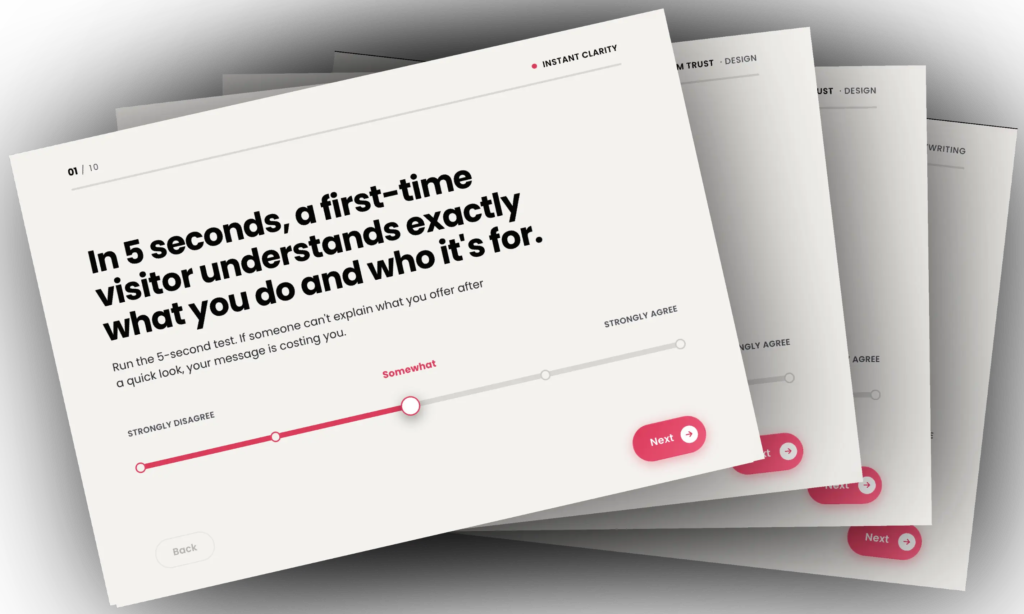
At Studio1 Design, we have this interactive AI tool that provides strategic advice to improve your website.
We use many of these tools below. They’ve dramatically improved our efficiency and expanded what’s possible within tight timelines.
The Current AI Design Toolkit
Here are the AI tools that are making an impact in website design:
Visual Design & Imagery:
- Midjourney & DALL-E 4 – Generate stunning imagery from text descriptions with unprecedented realism
- Adobe Firefly – Integrated AI image generation directly within Creative Suite
- Photoshop AI – Edit Images, Powered by the New Adobe Firefly Image 3 Model
- Canva’s Magic Design – AI-powered layout suggestions and design automation
- Stable Diffusion XL – Open-source image generation with fine-tuned control
Code & Development:
- GitHub Copilot X – Context-aware code suggestions and entire function generation
- Cursor AI – AI-powered code editor with deep contextual understanding
- Replit Ghostwriter – Build full applications through conversation
- Lovable.dev – Transform designs into production-ready code
Copywriting & Content:
- ChatGPT with Deep Research – To understand your target audience
- Claude 4 – Sophisticated text generation with nuanced understanding
- Copy.ai & Jasper – Marketing-focused copywriting assistance
- Writesonic – AI-powered content creation with brand voice training
Design Assistance:
- Figma AI – Intelligent layout suggestions and design system automation
- Framer AI – Generate responsive designs from simple descriptions
- Dora AI – Create 3D and animated websites through conversation
- Uizard – Convert sketches and wireframes into editable designs
Although all of those tools are genuinely impressive, here’s what you need to know:
All these AI tools share three critical limitations that prevent them from replacing strategic designers:
- They lack business context – AI doesn’t understand your specific market position, competitor landscape, or unique value proposition
- They can’t think strategically – AI generates outputs based on patterns, not strategic thinking that drives conversions
- They have no conversion expertise – AI doesn’t understand the psychological principles that turn visitors into customers
Think of AI like an incredibly talented intern who can execute tasks brilliantly but still needs experienced direction to create something that actually drives business results.
What AI Does Exceptionally Well
Let’s give credit where it’s due. AI has genuinely transformed certain aspects of website design, and ignoring these capabilities would be foolish.
Rapid Concept Generation
AI excels at producing multiple design directions quickly. Need to explore 10 different home page layouts? AI can generate them in minutes instead of days.
You can test more concepts, explore more creative directions, and find the right visual approach faster.
However, most AI-generated concepts lack the strategic thinking that makes one layout convert better than another.
Asset Creation at Scale
Need 50 product images in a consistent style? Want to create social media graphics for every blog post? AI handles this efficiently.
Design teams can produce more visual content without sacrificing quality or consistency.
However, AI-generated imagery often lacks the authentic, branded feel that helps premium businesses stand out.
Code Acceleration
AI can generate clean, functional code for common components, dramatically speeding up development time.
Developers spend less time on routine coding and more time on complex functionality.
However, AI-generated code often misses accessibility standards, performance optimization, and brand-specific requirements.
Copywriting (When Trained Properly)
Here’s something important: AI can produce exceptional copywriting when it’s properly trained.
When we train AI models with the conversion principles from my book Next Level Website Design, understanding psychological triggers, audience pain points, and strategic positioning, the results are genuinely impressive.
AI-generated copy that incorporates these principles can:
- Address specific audience pain points effectively
- Create compelling headlines that grab attention
- Structure content for maximum readability and engagement
- Maintain consistent brand voice across multiple pages
Copywriting becomes faster and more consistent when AI understands proven conversion frameworks.
However, the AI still needs strategic direction. It needs to be told what to write, who to write for, and what action to drive. That strategic input comes from experienced copywriters and marketers who understand your business.
Iteration Speed
Want to test three different color schemes? Five different calls-to-action? AI makes rapid iteration possible.
More testing means better data and better optimization.
However, testing requires a strategy. Random changes don’t improve conversions; strategic hypotheses do.

The Strategic Gap: What AI Struggles With
Despite all the hype, AI fundamentally cannot replace the strategic thinking that turns websites into conversion machines.
AI Doesn’t Understand Your Unique Market Position
Your business exists in a specific market with specific competitors. You have a unique value proposition, price point, and ideal customer.
AI generates designs based on patterns it’s learned from millions of websites. It has no concept of how to position your brand uniquely within your specific competitive landscape.
Generic positioning means you look like everyone else. Standing out requires strategic differentiation that AI cannot conceive.
AI Can’t Create an Authentic Brand Identity
Your brand is more than a color palette and a logo. It’s the emotional connection you create with your audience.
AI can generate brand assets, but it cannot create the cohesive brand strategy that makes businesses memorable and trusted.
Authenticity is currency. Audiences can spot generic, AI-generated branding instantly, and they distrust it.
Experienced brand designers understand how to translate your values, personality, and positioning into visual language that resonates emotionally with your ideal customers.
AI Lacks Conversion Expertise
Here’s the big one: AI doesn’t understand why people buy.
Conversion-focused design isn’t about making things “look good.” It’s about understanding psychological principles like:
- Social proof and its strategic placement
- Scarcity and urgency (used authentically for brand positioning)
- Visual hierarchy that guides the eye toward conversion points
- Risk reversal that overcomes buying objections
- Trust-building elements positioned strategically throughout the user journey
A beautiful website that doesn’t convert is just an expensive online brochure. The difference between a 2% and 6% conversion rate can mean hundreds of thousands in revenue.
AI Can’t Navigate Complex Client Needs
Business websites serve multiple purposes simultaneously. You need to:
- Attract cold traffic and establish credibility
- Nurture warm leads through valuable content
- Strategize lead magnets and funnel steps
- Convert hot prospects into customers
- Serve existing customers with resources and new offers
- Position yourself as an authority in your space
Creating a website strategy that serves all these audiences simultaneously while maintaining a cohesive brand experience requires human judgment and experience.
A one-size-fits-all approach fails everyone. Strategic design creates different pathways for different visitor types.
AI Doesn’t Understand Risk
When an AI generates a website design, it has no concept of business risk.
What AI misses:
- Copyright concerns (AI trains on existing content, potentially copying protected designs)
- Brand reputation risk (generic designs damage premium positioning)
- Conversion risk (beautiful but ineffective design wastes marketing dollars)
- Technical risk (AI-generated code often misses critical security and performance considerations)
Your website is often your biggest business asset. Making decisions about it requires risk assessment that AI cannot provide.
Why Conversion-Focused Strategic Design Still Requires Humans
After designing 2,000+ websites, we understand exactly how to structure visual hierarchy, craft compelling copy, and position trust elements to maximize conversions. That expertise cannot be replicated by AI pattern matching.
When we redesigned the website for Enterprise Fitness, we positioned them as the premium fitness coaching option in Melbourne. This positioning strategy required understanding their competitors, their unique strengths, and their ideal customers’ psychology. No AI could have made those strategic decisions.
Let me share what truly separates strategic design from AI-generated templates: understanding the psychology of conversion.
The Five Essential Principles of the human advantage:
In my book Next Level Website Design, I outline five essential principles that drive conversions:
Understanding Your Audience
Your audience isn’t thinking about you; they’re thinking about how you can solve their problem. Before designing, you must deeply understand their pain points, desires, and decision-making process.
AI can’t interview your customers, analyze their behavior patterns, or understand the nuanced psychology of your specific market.
Brand Positioning
To stand out, you need to zig while your competitors zag. Your brand must uniquely reflect who you are, what you offer, and why you’re different.
AI can only create variations of what already exists. It cannot conceive genuinely unique positioning strategies.
Marketing Strategy
Most visitors don’t buy the moment they land on your website. A well-crafted strategy ensures your website caters to each stage of the customer journey.
AI generates individual pages, not cohesive marketing strategies that guide visitors from awareness to conversion.
Psychological Influences
People don’t buy on logic alone. Strategic design leverages psychological principles to create desire and guide action.
AI can replicate design patterns, but it doesn’t understand why certain psychological triggers work or when to deploy them strategically.
Conversion-Focused Design
Your website should make you look like a rock star and strategically turn visitors into customers.
AI optimizes for aesthetics, not conversions. It cannot A/B test hypotheses, analyze conversion data, or iteratively improve performance based on real user behavior.
The Compound Effect of Strategic Thinking
When you combine these five principles, something magical happens: your website becomes a 24/7 marketing machine that consistently generates leads and sales.
This compound effect, where strategy, psychology, and design work together, is what AI cannot replicate.
Another one of our clients, Sax School Online, saw their email list grow by 25,000 subscribers and added over 1,000 new paying members in 12 months after we redesigned their website using these principles. The design wasn’t just “pretty,” it was strategically built to guide visitors through a conversion funnel that addressed their psychological objections at every stage.
Could AI have generated that result? Absolutely not.
Here’s something else AI can’t replicate: decades of experience.
After 25 years and 2,000+ websites, I can look at a website and immediately identify the 10 things that are killing conversions. I can tell you which headlines will resonate with your audience and which will fall flat. I can predict which layout will guide visitors toward conversion and which will create confusion.
This pattern recognition isn’t something you can prompt into AI; it comes from years of testing, iterating, and learning what actually works.
How We Use AI at Studio1 Design
We’re not anti-AI. We’re pro-results. At Studio1 Design, we’ve integrated AI into our workflow in strategic ways that enhance our efficiency without compromising quality or strategy.
Our AI-Enhanced Design Process
Research & Discovery Phase
- Use AI to analyze competitor websites at scale
- Generate initial audience persona hypotheses
- Explore visual direction concepts rapidly
We validate AI insights with real customer research and strategic analysis.
Brand Strategy & Positioning
- Use AI to explore mood board concepts
- Generate color palette options
- Test typography combinations
Our Brand Director, makes final strategic decisions based on brand positioning and target audience psychology.
Copywriting & Content
- Train AI on our client’s brand voice and Next Level Website Design conversion principles
- Generate initial copy drafts
- Create multiple headline variations for testing
Our copywriters refine AI drafts, ensuring authentic voice, strategic messaging, and conversion-focused structure.
Visual Design
- Use AI for rapid concept generation
- Generate custom imagery when appropriate
- Create design variations for A/B testing
Our design team ensures visual hierarchy supports conversion goals, brand consistency is maintained, and designs are optimized for user experience.
Development
- Use AI to accelerate routine coding tasks
- Generate component code for common patterns
- Automate responsive design testing
Our developers ensure code quality, accessibility standards, performance optimization, and security best practices.
The Result: Better Outcomes, Faster
By strategically integrating AI into our workflow, we’ve achieved:
- 30% faster delivery times without compromising quality
- More design variations for client review and testing
- Higher quality copy that maintains an authentic voice while leveraging conversion principles
- Better client outcomes because we spend more time on strategy and less on routine tasks
But here’s the critical point: AI is a tool in our process, not a replacement for our expertise.
FAQs About Using AI For Your Website
Should I use AI to create my business website?
It depends on your goals. If you need a basic online presence quickly and you’re okay with looking similar to competitors, AI tools can create something functional.
However, if you want to:
- Stand out in a crowded market
- Convert visitors into customers
- Command premium pricing
- Build a memorable brand
Then you need strategic design expertise that AI cannot provide.
Think of it this way: AI can help you build a website. Strategic designers build a marketing machine.
Can AI help improve my existing website?
Absolutely. AI is excellent for:
- Generating alternative copy for A/B testing
- Creating additional imagery
- Exploring design variations
- Analyzing user behavior data
But the strategic decision, what to test, why it matters, how to interpret results, still requires human expertise.
How are you using AI at Studio1 Design?
We use AI strategically throughout our process:
- Research and competitor analysis
- Rapid concept generation
- Copy drafting (trained on proven conversion principles)
- Design variation creation
- Code acceleration
But every AI output is reviewed, refined, and validated by experienced strategists, designers, and developers who ensure it drives business results.
Will AI eventually replace designers?
Not the strategic ones.
AI will continue to improve at executing tasks. But strategic thinking, understanding business context, creating unique positioning, leveraging psychological principles, and optimizing for conversions requires human insight, experience, and creativity.
Think about it like this: CAD programs didn’t replace engineers. Word processors didn’t replace authors. GPS didn’t replace strategic navigation.
AI won’t replace strategic designers. It will make them more efficient.
What if my competitors are using AI-generated websites?
That’s actually good news for you.
If your competitors are using AI to create generic, template-based websites, that’s your opportunity to stand out with strategic, conversion-focused design.
When everyone else looks the same, differentiation becomes even more valuable.
The real question: What’s the ROI?
If a strategically designed website converts 3-5% of visitors instead of 0.5-1%, the investment pays for itself quickly. For many of our clients, a single new customer covers the entire design investment.
Conclusion
AI is not replacing website designers. It’s making strategic designers more efficient and effective.
The truth is simple: AI is an incredible tool, but it’s no substitute for strategic thinking.
If you want a website that simply exists online, AI tools can create something functional. But if you want a website that:
- Positions your brand uniquely
- Converts visitors into customers
- Commands premium pricing
- Builds trust and authority
- Works as a 24/7 marketing machine
Then you need the strategic expertise that only experienced designers can provide.
At Studio1 Design, we’ve embraced AI as a powerful tool in our workflow. But we’ll never let it replace the strategic thinking, conversion expertise, and creative problem-solving that turns websites into business assets.
After 25 years and 2,000+ websites, here’s what I know for certain: the websites that generate the best results combine AI’s efficiency with human strategic thinking. That’s the future of website design, and it’s more exciting than ever.
Ready to Transform Your Website?
If you know your website needs to be more than an online brochure, if you want a strategic, conversion-focused design that actually drives business results, let’s talk.
Book a free strategy call with our team. This isn’t a hard sell, just a friendly conversation about your goals and how strategic design can help you achieve them.