Key Takeaways
- Trust breaks down in seconds. Visitors decide before they’ve read a word of your copy.
- Five signals build B2B trust. Specific proof, quiet authority, risk reversal, human accessibility, and making the visitor the hero.
- A 44% conversion rate boost. Cold, paid traffic, once these signals were in place.
Right now, people are on your website deciding whether to trust you. You’ll never see it happen. No error message, no abandoned form you notice. They just read, decide, and leave. Here’s the frustrating part…
It’s probably not your price, your service, or your credentials costing you the lead. Most B2B websites are missing five specific trust signals. Get them right, and the numbers move fast: one page we designed converted cold traffic, complete strangers from paid ads, at 44%.
That’s a trust problem. It’s also why a website can be losing leads and sales without you realizing it. B2B buyers research you silently. They land, judge in seconds, and if the trust isn’t there, they’re gone without a trace. We’ve watched this pattern across more than 2,000 websites we’ve designed. The businesses that win aren’t the ones with the most credentials, they’re the ones sending the right five signals.
5 Trust Signals
A trust signal isn’t a claim. It’s proof. “Trusted by industry leaders” is a claim. A row of named client logos linking to real case studies is a signal. It answers the last of the three questions every visitor is really asking: can I trust you enough to reach out? Trust matters more in B2B for one reason. Buyers are rarely spending their own money.
They’re often recommending a vendor to a boss or a committee, and a bad recommendation costs them credibility. That’s a higher bar than most consumer purchases ever face. In our own client work, the buyers who convert aren’t chasing the safest, most well-known name. They’re looking for evidence you understand their specific problem.
1. Specific Social Proof
Your website probably has testimonials. So why aren’t they working? Because they’re generic. “Great to work with, highly recommend” could be about a plumber, a lawyer, or a software company. It proves nothing. The brain skips right past it.
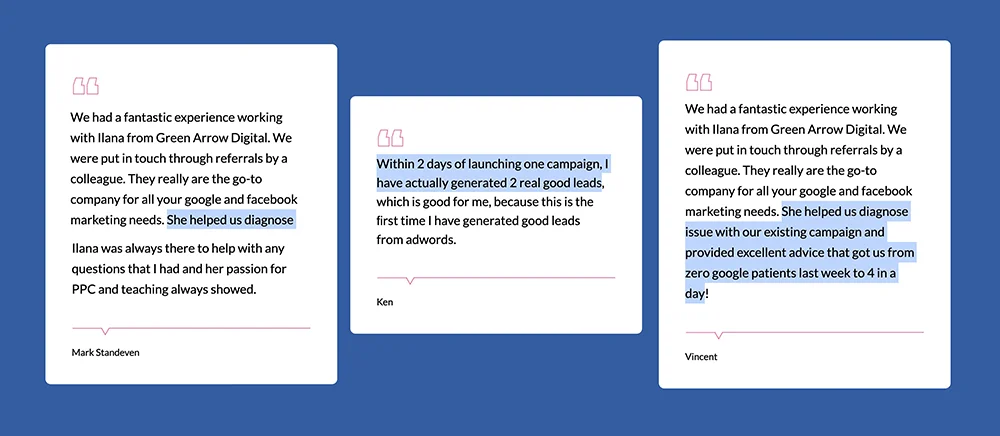
The testimonials that move a skeptical B2B buyer have three things: a number, a timeframe, and a situation the visitor recognizes as their own. “We doubled qualified inquiries in 90 days” does more work than ten paragraphs of praise.
This example is from our client Ilana Wechsler’s TeachTraffic.com, where she teaches paid advertising to a skeptical B2B audience. It illustrates what a specific, named proof can look like…
2. Quiet Authority
When founders hear “show your authority,” they dump every credential onto the home page: awards, certifications, jargon, a wall of me, me, me. It backfires. To a skeptical buyer, shouting about yourself reads as insecurity.
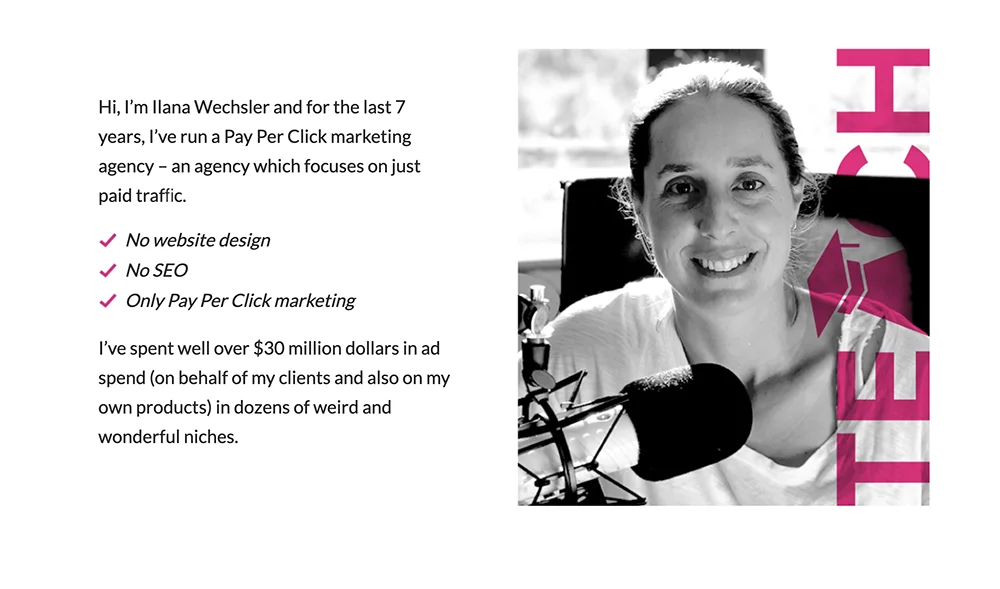
Real authority is shown, not announced: client logos visitors recognize, media mentions, content deep enough that the visitor learns something before you’ve asked for anything. When someone reads your page and thinks, “This person understands my problem better than I do,” that’s authority.
3. Lead With Value
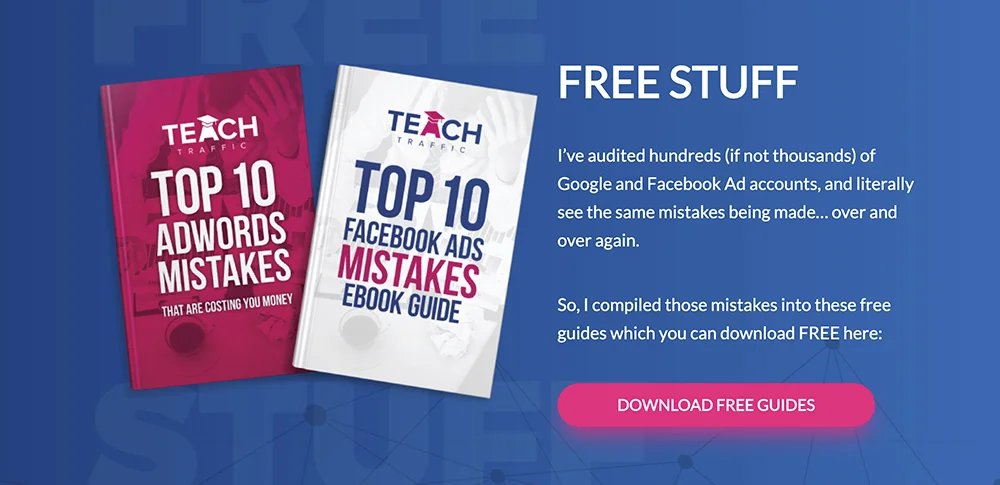
Every B2B buyer carries fear to your website, wasting budget, looking foolish, and being locked into something that doesn’t work. “Contact Us” asks the visitor to take all the risk. A free audit, guide, or case evaluation flips it.
Ilana doesn’t ask for anything up front. Her site is loaded with free value: a Google Ads Gotcha Guide, an ad tracking checker tool, guides on the top 10 ad mistakes, risk reversal and authority, in one hit.
4. Human Accessibility
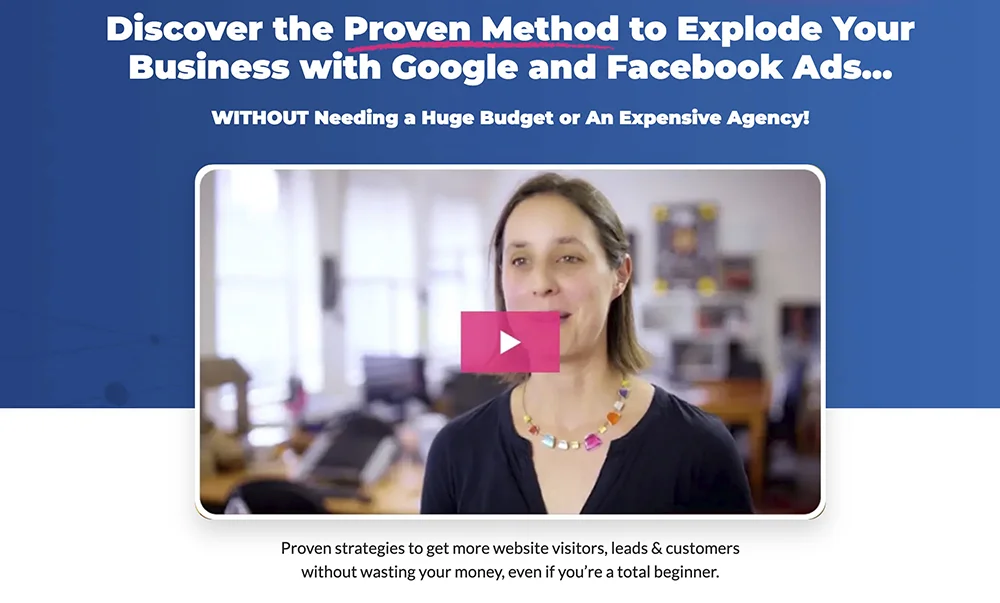
Real photos of you and your team, not stock images. A real name fronting the business, not a faceless brand. The strongest version of this signal: you, on camera. It’s why Ilana fronts Teach Traffic personally.
Visitors aren’t deciding whether to trust a company; they’re deciding whether to trust her. AI-built websites are flooding every market, and any competitor can spin up a passable site in an afternoon. What they can’t spin up is a real person who shows up and demonstrably knows their stuff. Looking human used to be a nicety. Now it’s a differentiator.
5. Make the Visitor the Hero
Nearly every B2B website is about the business, our story, our process, and our awards. It feels logical, but it’s backwards. When a visitor lands on your site with a problem burning a hole in their budget, they’re not looking for your story. They’re looking for evidence that you understand theirs. That’s the fifth signal: demonstrated understanding of the visitor’s problem.
It’s the frame the other four signals hang off. Ilana’s platform is built around her visitors, not her: small business owners bleeding ad spend, agencies wanting sharper methods, in-house teams quietly out of their depth.
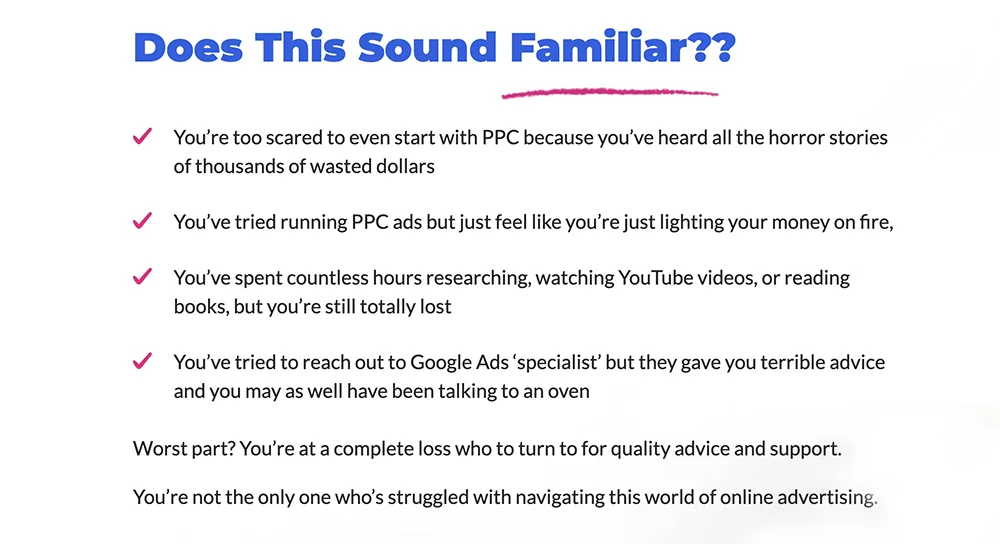
The result: the landing page we designed for her Google Ads Gotcha Guide converted cold traffic at 44%, from June 1 to December 31, 865 leads from one page. Every business is different, and results depend on market conditions, traffic levels, and audience readiness. This example illustrates what a visitor-first approach can produce, not a typical or guaranteed outcome. Stop proving how good you are. Start proving how well you understand them.
Where to Start
None of these five signals needs a redesign to test. Swap a generic testimonial for a named one, add a real photo, or flip “Contact Us” into a free first step. Put proof next to the claim it supports.
Frequently Asked Questions
What are website trust signals?
Specific, verifiable elements that show a visitor you’re legitimate and capable, not just claiming to be.
How do I make my website look more trustworthy?
Replace vague claims with specifics, a named result, a free first step, a real team photo.
What’s the most important trust signal for B2B?
Making the visitor the hero. Buyers want evidence you understand their problem, not your story.
How many trust signals does a home page need?
No fixed number. A signal near your call to action does more work than five scattered lower on the page.
Can trust signals fix a website that isn’t generating leads?
They help, but they’re rarely the only factor; review them alongside page clarity, offer strength, and form friction.
Where Is Your Site Losing Trust?
A website can have all five signals somewhere on the page and still underperform if none of them sit near the form, the pricing section, or the booking button. That’s exactly what a conversion-focused website audit is built to find. Book a quick intro call and we’ll walk through where the trust is leaking on your site.