Key Takeaways
- AI search tools like ChatGPT and Perplexity now drive a quarter of all business searches
- 97% of visitors leave within 15 seconds. Strategic home page design captures them before they bounce
- Above-the-fold clarity boosts your conversions and helps AI understand what you do instantly
- Layered social proof reduces purchase anxiety and gives AI the trust signals it needs to recommend you
Most websites are experiencing a 30-40% drop in organic traffic
With AI search providing answers instantly, you’re likely getting less traffic to your website. That’s why it’s more important than ever to build trust in your brand, provide value, and persuade people ethically to take action the moment they land on your website.
The game has changed, and it’s not just humans judging your home page anymore. AI tools like ChatGPT, Perplexity, and Google’s AI Overviews are also deciding if your website is worth displaying in their answers to your prospect’s questions.
The businesses winning these AI recommendations are capturing higher-value leads and prospects who arrive pre-qualified and ready to buy because they trust the AI’s recommendations.
The Traditional Website Approach (That Fails Humans AND AI)
Most businesses create home pages that talk about themselves, showcase features instead of benefits, overwhelm visitors with every service offered, and assume visitors will figure out what to do next. This approach leads to confused visitors, high bounce rates, lost revenue opportunities, and AI tools that can’t figure out what you actually do or who you help.
What makes a high-converting home page also rank in AI search?
I can tell you that it’s not about having an over-designed website with distracted animations, parallax effects, video backgrounds, convoluted copy, keyword stuffing, or too many choices.
Instead, it needs to quickly establish trust in your brand based on foundational principles that systematically guide visitors toward becoming customers and help AI tools clearly understand why they should recommend your business.
The Conversion & AI-Optimized Solution
Transform your home page into a strategic relationship-builder that addresses the critical questions every visitor (and AI tool) has: “What do you do?”, “Who do you help?”, and “Why should I trust you?”
Use psychological principles like social proof, authority, and reciprocity to build trust while guiding different visitor types to their appropriate next steps, based on their awareness level and buying readiness.
What does AI care about?
AI tools scan for clear value propositions, specific outcomes, measurable results, and social proof. When your home page answers questions clearly about what you do, how you do it, why people should choose you over your competitor, and the results you achieve, then AI can confidently recommend you.
A conversion-focused, AI-optimized home page prioritizes clarity over creativity, benefits over features, and specific outcomes over vague promises. Poor execution confuses both visitors and AI with unclear messaging, buried value propositions, and decision paralysis from too many options.
The Psychology Behind High-Converting Home Pages (That AI Tools Reward)
The science behind conversion-focused home pages is rooted in fundamental human psychology.
AI tools are trained to recognize the same trust signals humans respond to, including social proof, authority markers, specific outcomes, and clear positioning. When your home page demonstrates competence, reliability, and deep audience understanding, you win with both humans and AI.
People don’t buy from businesses; they buy from people they trust who understand their problems and can guide them to solutions. Your home page must create psychological safety through clear messaging, strategic trust-building elements, and a cohesive experience that moves visitors from skeptical browsers to engaged prospects.
In markets where competitors use confusing messaging or generic positioning, a strategically designed home page immediately differentiates your business as more professional and trustworthy, both to human visitors and to AI tools deciding which businesses to recommend.
Step-by-Step Guide to Creating a High-Converting, AI-Optimized Home Page
Based on analyzing thousands of high-performing websites and extensive conversion testing, here’s the proven framework that consistently transforms home pages from digital brochures into revenue-generating assets that both humans and AI love.
Step 1: Master Your Above-the-Fold Hero Section (The Single Biggest Success Factor for Humans and AI)
Your hero section determines 80% of whether visitors stay or leave. It also tells AI tools whether your business is worth recommending.
Essential Hero Section Elements:
- Benefit-driven headline: Focus on their most pressing problem and your solution outcome (this helps AI understand who you serve)
- Supporting subheadline: Elaborate on the specific value and transformation you provide (specific beats vague for AI)
- Primary call-to-action: Use action-focused text that matches their buyer’s journey stage
- Engaging visual: Reinforce your message with authentic imagery that builds trust
- Authority signals: Include credentials or media mentions that support credibility (AI weighs these heavily)
Headline Strategy That Works for Humans and AI: Your headline should make visitors think, “This person truly understands what I’m dealing with.” Focus on the outcome they want, not what you do.
Weak (for humans AND AI): “We provide marketing services”
Strong (for humans AND AI): “Transform Your Struggling Social Media Into a Lead-Generation Machine in 90 Days”
Why this matters: Visitors in the Awareness stage need education about their problem, Consideration stage visitors are comparing solutions, and Decision stage visitors need trust and risk reversal. Your hero section must address all three simultaneously. AI tools scan for this same clarity to determine if you’re the right recommendation.
Yosha Law transformed their generic headline into outcome-focused messaging that positioned clients as heroes of their legal journey, contributing to their jump from 12 cases per year to 16 in the first month. Their clearer positioning also made them more discoverable in AI-driven searches.
Step 2: Design Navigation That Converts (And Helps AI Understand Your Site Structure)
Strategic navigation isn’t just an organization. Instead, it’s conversion psychology and AI comprehension.
Navigation Structure That Builds Trust:
- Limit menu items: 5-7 maximum to prevent decision paralysis
- Strategic positioning: Place your strongest credibility-building page (like “Results” or “Case Studies”) second in the menu
- Clear CTA placement: Position the primary action button in the top right corner
- Responsive design: Ensure sticky header functionality and seamless navigation across all devices
Psychology Behind Navigation Decisions: Your navigation should act like a concierge: helpful, simple, and strategic. Place elements that build trust before elements that ask for commitment. Browsers who aren’t ready for your main CTA need alternative paths that nurture them toward eventual conversion.
Why AI cares: Clear navigation helps AI tools understand your site structure and find the proof points (case studies, testimonials, results) they need to recommend you confidently.
Pro tip from Studio1 experience: We’ve found that including an “About” or “Our Approach” page early in navigation catches browsers and converts them into prospects by building personal connection and methodology clarity. This also gives AI a clear understanding of your unique approach.
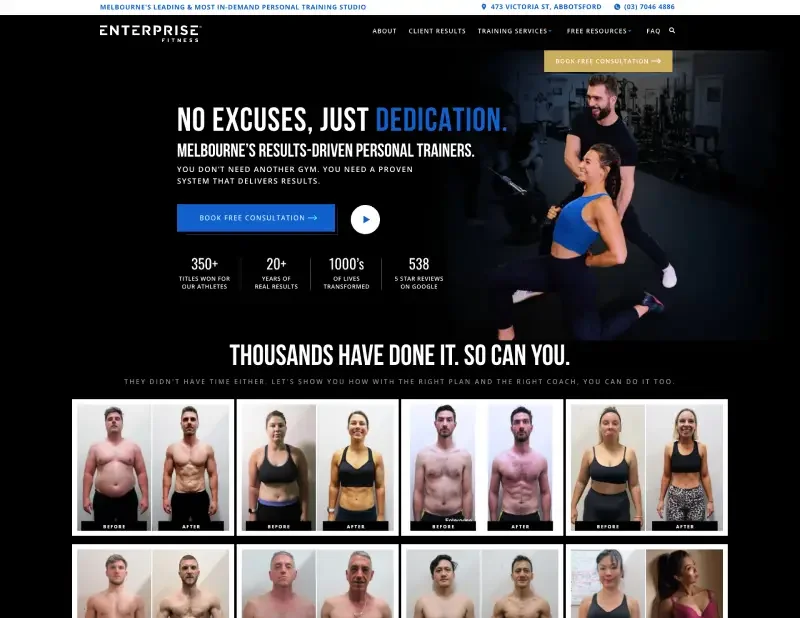
Real-world impact: Our client, Enterprise Fitness, simplified their navigation by removing competing elements and focusing on core services, which contributed to a 24% increase in consultation bookings. Every menu item should either build trust or move visitors toward conversion.
A great example to show you these steps in action is our client Yosha Law Firm.

Step 3: Position Your Offers to Make Competition Irrelevant (For Humans and AI)
Instead of cramming every service onto your home page, segment people by their intent and use strategic positioning for each of your offers that makes price comparison irrelevant and helps AI understand your unique value.
Strategic Offer Presentation:
- Focus on methodology: Highlight your unique approach rather than generic services (AI rewards differentiation)
- Benefit-focused headlines: Connect their current problem to your solution outcome
- Clear descriptions: Explain the transformation, not just the deliverable (specific outcomes help AI)
- Strategic CTAs: Direct visitors to deeper landing pages optimized for conversion
Differentiation That Matters: True positioning makes competitors irrelevant by creating a category of one.
Commodity positioning (ignored by AI): “We offer web design services.”
Strategic positioning (AI can recommend this): “Transform Your Brand & Website into a 24/7 Sales Machine. Our proven conversion-first approach transforms your website into a lead-generating machine that both people and AI trust.”
Why this approach works: When prospects understand your distinct methodology, they stop shopping around and start moving toward working with you. Specific positioning attracts ideal customers while repelling poor fits. AI search favors businesses with clear, unique methodologies over generic service providers.
Step 4: Build Unshakeable Trust With Layered Social Proof (The #1 Signal AI Tools Look For)
Without credibility, visitors won’t convert regardless of how good your offer sounds. Without social proof, AI tools won’t recommend you.
Types of Social Proof That Convert (Ranked by AI Impact):
- Authority signals: Years in business, credentials, certifications that build initial credibility
- Peer validation: Testimonials from people similar to your visitors that create relatability
- Results-focused proof: Specific outcomes with numbers that demonstrate capability (AI loves numbers)
- Risk reversal: Guarantees or trials that reduce purchase anxiety
Strategic Social Proof Placement: Feature at least one strong testimonial above the fold to build instant trust. Layer different types of proof throughout your page to address various psychological barriers. Always use real names, photos, and specific results rather than generic praise. AI can detect and reward authenticity.
Pro tip: AI search scans for testimonials across the entire web, not just your website. So be sure to ask for customer reviews on various review platforms/websites to confirm broad success.
AI optimization: Display your review count and average rating prominently. Example: “4.9/5 stars from 340+ verified clients” gives AI the quantitative proof it needs.
To dive deeper into why this principle works and how to apply it effectively, check out The Power of Social Proof on Your Website. In that article, you’ll discover why social proof is the single most powerful influencer of conversions and how to use it to turn visitors into buyers.
Step 5: Eliminate Cognitive Load Through Strategic Design Simplicity
When visitors feel overwhelmed by your page, they choose the easiest option: leaving. When AI tools encounter cluttered, confusing pages, they skip recommending you.
Essential Cognitive Load Reduction Strategies:
- Remove competing elements: Eliminate sidebars, banners, and anything that distracts from your core conversion message
- Strategic white space: Use breathing room that makes your content feel premium and professional, not cramped
- Scannable content structure: Break information into digestible sections with clear headers and bullet points (AI loves structure)
- Single-focus sections: Limit each page section to one primary CTA to prevent decision paralysis
The Neuroscience Behind Simplicity:
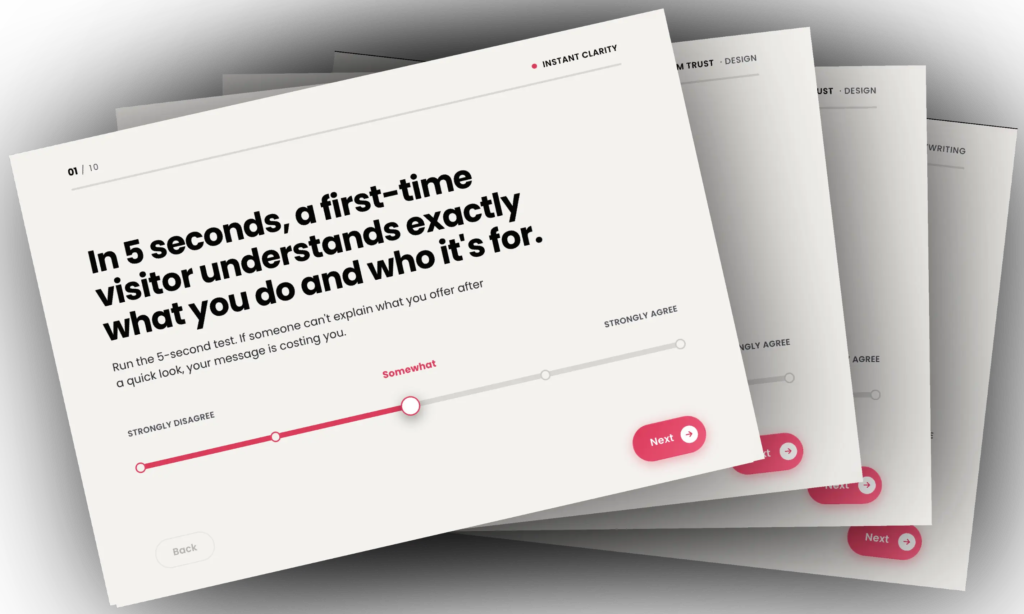
When the brain works too hard to process information, it triggers the “cognitive escape” response. The “5-second rule” isn’t arbitrary: visitors should understand what you offer, who it’s for, and what to do next within 5 seconds of landing on any section.
Why AI rewards simplicity: AI tools scan for clear, structured information they can quote and summarize. Cluttered pages with competing messages make it impossible for AI to extract your core value proposition.
Design for All Devices: With over 60% of traffic coming from smartphones, ensure your design translates seamlessly across desktop, tablet, and mobile. Strategic white space isn’t wasted space; it’s psychological breathing room that makes your content feel trustworthy and professional on every screen size.
Pro tip from Studio1 experience: We’ve found that removing just 2-3 competing elements from a home page can increase conversions by 23-45%. Less truly is more when it comes to conversion-focused design.
Another great example to show you these steps in action is our client, Enterprise Fitness.
Step 6: Create a “Why Choose Us” Section That Makes Competition Irrelevant
True differentiation doesn’t make you better; it makes you different in ways that matter. This section helps AI understand why you’re the unique recommendation for specific customer needs.
Strategic Differentiation Elements:
- Unique methodology: Explain your specific approach or process that competitors don’t offer
- Philosophy or values: Share the beliefs that drive how you work with clients differently
- Proof of difference: Include case studies, guarantees, or outcomes that validate your unique approach
- Team credibility: Use authentic team photos or founder stories that build personal connection
Psychology of Effective Differentiation: The best differentiators aren’t features; they’re about the experience and transformation that only you provide. When prospects understand your distinct methodology, they stop shopping around and start evaluating whether they’re ready to work with you specifically.
AI-Friendly Positioning Formula: Instead of claiming to be “the best,” position yourself as “the only one who…” with specific proof.
Structure this section to answer: “Why choose [Your Brand] for [Service]?”
- List 5-10 specific reasons (features → benefits)
- Include measurable outcomes when possible
- Use testimonials that validate your differentiators
- Provide guarantees or risk-reversal offers
Real-world impact: A swimming coach added a clear methodology section explaining his unique “Progressive Confidence Framework,” contributing to doubling membership from 4,500 to 9,000 within 12 months. Prospects stopped comparing prices and started asking about availability. The clear positioning also made him the top AI recommendation for swimming lessons in his city.
Step 7: Capture Every Visitor Type With Strategic Secondary CTAs
Not every visitor is ready to buy today, but that doesn’t mean they’re not valuable. Secondary CTAs ensure you capture leads at different stages of readiness rather than losing them forever.
Secondary CTA Strategy Framework:
- For browsers (awareness stage): Free guides, educational resources, or industry reports
- For researchers (consideration stage): Case studies, portfolio samples, or comparison tools
- For evaluators (decision stage): Free consultations, audits, or strategy sessions
- For skeptics: Risk-free trials, guarantees, or “test drive” opportunities
The Psychology of Nurture-Based Conversion: This applies the fundamental marketing principle that most visitors don’t buy immediately. They need nurturing through the customer journey. Create different pathways based on visitor intent and temperature, using the reciprocity principle by leading with value before asking for commitment.
Implementation Best Practices: Secondary CTAs should feel like natural next steps, not backup options for people who won’t buy your main offer. Position them strategically throughout your page to catch visitors at different engagement levels.
Why AI rewards multiple CTAs: AI tools recognize that businesses serving different buyer stages are more customer-focused and trustworthy.
Real-world growth: A property investment company implemented this multi-CTA strategy and grew from 20 to 140+ team members by providing value at each buyer’s journey stage. Their lead generation increased 340% because they stopped losing visitors who weren’t ready for immediate consultation.
For practical examples and proven techniques on creating high-performing CTAs that match visitor intent, visit How to Boost Conversions With Effective CTA Buttons. It walks through the design and psychology behind buttons that drive measurable results.
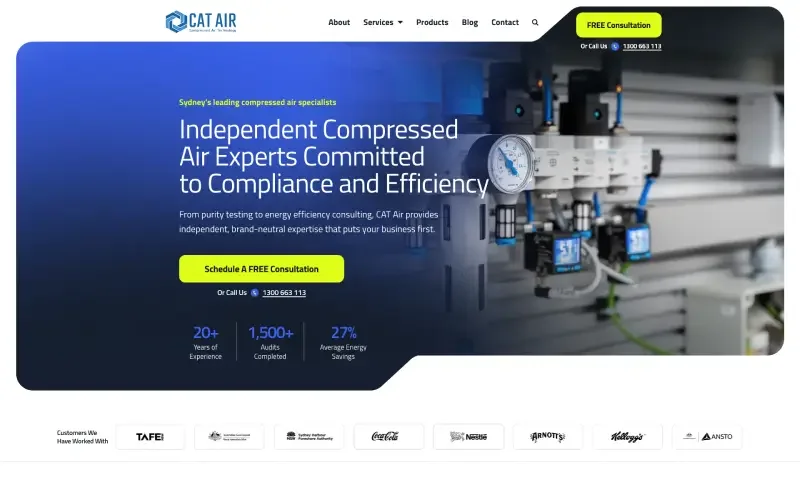
Another great example to show you these steps in action is our client Cat Air.
Tools to Optimize Your Home Page Conversion
Once you’ve implemented the core conversion framework, these battle-tested tools provide the data and automation needed to multiply your results and identify exactly where to optimize next.
Heatmap Analytics:
- Hotjar: Track visitor behavior and identify optimization opportunities
- Crazy Egg: Understand click patterns and scroll depth
- Microsoft Clarity: Free heatmap and session recording tool
A/B Testing Platforms:
- Google Optimize: Test headline and CTA variations
- Unbounce: Specialized landing page optimization
- VWO: Comprehensive conversion rate optimization suite
Trust Signal Tools:
- Trustpilot: Automated review collection and display
- Proof: Social proof widgets and notifications
- Testimonial Hero: Video testimonial collection and display
Critical Reality Check: Master the psychology before you measure the metrics. We’ve seen too many businesses waste months tweaking button colors while ignoring fundamental conversion problems like unclear messaging or missing social proof.
Common Mistakes That Kill Home Page Conversions (And AI Recommendations)
Even small website design mistakes can tank your conversions and make AI tools skip over you. Watch out for:
Design Mistakes That Hurt Conversions AND AI Visibility:
- Oversized logos or images pushing content below the fold
- Generic stock photography or overuse of AI-generated images (looks fake to humans and AI)
- Autoplay videos or excessive animations (increases bounce rates, and slows loading)
- Poor responsive design (60%+ of traffic is mobile; broken mobile = lost conversions)
- YouTube video embeds and social media icon links (they drive people off your website)
These seemingly small details can destroy trust and credibility instantly. Generic stock photos scream “template” instead of authentic business, while oversized logos push your value proposition below the fold, where most visitors never see it.
Poor responsive design kills conversions since most traffic comes from smartphones. Every element must earn its place by supporting your conversion goals. The principle is simple: anything that creates friction, confusion, or distraction reduces conversions.
Autoplay videos increase bounce rates and slow loading times. YouTube embeds and social media links send visitors away from your website.
While video backgrounds are a common culprit, sliders (or carousels) create similar issues. They distract visitors, slow your site, and reduce clarity. If you’d like to see why both of these trends hurt conversions, read Why Image Sliders and Video Backgrounds Kill Conversions, a breakdown of the data, psychology, and real-world tests behind it.
Want to uncover the hidden reasons your website isn’t performing as it should? Check out 10 Reasons Why Your Website Is Not Converting to see the most common mistakes (and how to fix them) so your website can turn more visitors into paying customers.
Frequently Asked Questions About High-Converting Home Pages
Do I need to redesign my entire website or just the home page?
Start with your home page since it’s often the first impression and highest-traffic page. A strategically optimized home page can improve overall website performance by 20-35% before touching other pages. Once you see results from home page optimization, apply the same conversion principles to key landing pages, About page, and service pages.
At Studio1 Design, we typically see significant ROI from home page optimization alone, making it the most cost-effective starting point for most businesses.
How long does it take to see results from home page optimization?
Start with your home page since it’s often the first impression and highest-traffic page. A strategically optimized home page can improve overall website performance by 20-35% before touching other pages. Once you see results from home page optimization, apply the same conversion principles to key landing pages, About page, and service pages.
At Studio1 Design, we typically see significant ROI from home page optimization alone, making it the most cost-effective starting point for most businesses.
Can a better home page really improve my business revenue?
Absolutely. Your home page is often the bridge between marketing efforts and sales conversations. When prospects understand your value and trust your expertise before contacting you, sales conversations become consultative rather than convincing. This leads to higher close rates, better client quality, and premium pricing opportunities.
The AI multiplier effect: Leads coming from AI recommendations are typically worth 4.4× more than typical Google clicks because the AI already did the qualifying and persuasion work.
What’s the biggest mistake businesses make with home page design?
Making it about themselves instead of their customers. Most businesses create “company brochures” that talk about their history, features, and services instead of addressing visitor problems, desired outcomes, and trust concerns. The home page should be the visitor’s story with your business as the guide, not your business story where visitors play a minor role.
AI perspective: AI tools skip businesses that can’t clearly articulate who they help and what specific problems they solve.
How do I optimize my home page for AI tools like ChatGPT and Perplexity?
Focus on the same principles that convert humans: clear positioning, specific outcomes, strong social proof, and structured content. AI tools reward businesses that answer “who’s best for…” questions with specific, provable claims rather than vague marketing speak.
Key AI optimization strategies:
- Use specific numbers and outcomes (“increased conversions by 35% in 30 days”)
- Display review counts and ratings prominently
- Structure content with clear headers and bullet points
- Answer common buyer questions directly on your page
- Include testimonials with real names and specific results
How often should I update my home page for optimal conversions?
Design refresh: Review your performance metrics every month, and consider replacing your images and split-test the results. Update your entire website design every 2-3 years or when conversion metrics plateau despite optimization efforts.
Copy updates: Review your messaging and offers quarterly to ensure alignment with current market needs and your business evolution.
Performance testing: Run A/B tests on headlines, CTAs, and key sections every 2-3 months. Trust signals: Update testimonials, case studies, and achievements regularly to maintain freshness.
Pro tip: Before you make significant changes, review your entire industry to see if there are new competitors and solutions to the problems you solve.
Conclusion
A high-converting home page transforms your website from an online brochure into a 24/7 sales asset that works while you sleep. When you position customers as heroes, communicate value instantly, and systematically build trust through strategic design, your home page becomes the foundation for predictable business growth.
The difference between businesses that struggle with online conversions and those that thrive often comes down to one thing: a home page that truly serves visitors by addressing their needs, concerns, and desired outcomes in a clear, compelling way.
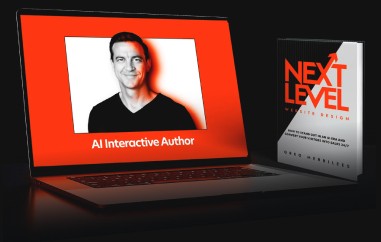
This article is adapted from Greg Merrilees’ book Next Level Website Design, which unpacks the principles in depth, supported by case studies and step-by-step frameworks that get results.
Action Step:
Take 20 minutes today to audit your current home page using this framework. Ask yourself: Does it answer “What do you do?”, “Who do you help?”, and “Why should I trust you?” within 5 seconds? Are your value propositions visitor-focused rather than business-focused? Is your primary CTA obvious and compelling?
A strategically designed home page shows how the right approach to messaging and positioning can deliver premium results without increasing advertising costs. The same conversion principles apply throughout your marketing: when you truly understand your audience and guide them strategically, they choose to work with you.
At Studio1Design.com, we’ve transformed over 2,000 websites into high-converting marketing assets for clients across industries, including Hollywood A-listers and fast-growing online businesses. Through extensive testing and optimization, we’ve discovered that a strategically designed home page can increase conversion rates by up to 35% while simultaneously improving visibility in AI-driven search results.
If you’d like expert guidance on transforming your home page into a high-converting sales asset that positions you as the strategic choice in your market, Request Free Video Website Audit today.